We would like to share with you news from Uganda’s ‘Nutritionist of the year 2025’, Kamara Daniel. He brings us his personal account of tackling malnutrition in the the population served by Bwindi Community Hospital, the challenges and successes.
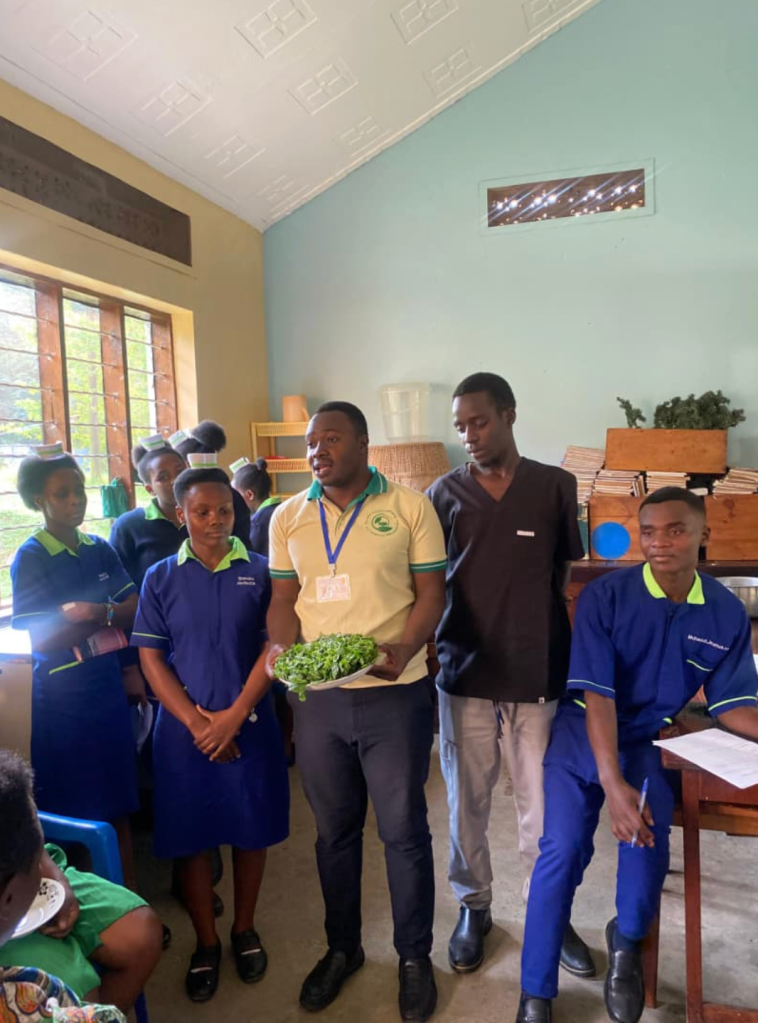
Photo 1: Kamara Daniel teaching on nutrition
Tackling Malnutrition in Kanungu District SW Uganda.
Uganda faces a serious burden of child wasting acute malnutrition, recent WHO data estimate over 268,000 Ugandan children suffer from wasting, and national surveys report an under‑5 wasting rate of roughly 3–4%. Kanungu District – a remote, hilly region in southwest Uganda – is no exception. Bwindi Community Hospital alone serves about 100,000 people in three Kanungu sub-counties. Most families here are smallholder farmers with very limited income: the typical household has seven children and lives on less than US$1 per day. With no running water or electricity, chronic poverty and food insecurity are pervasive. Many households lack the knowledge to grow and prepare a balanced diet, so children often go hungry. As a result, malnutrition is common and under‑recognized “many children with malnutrition…go undiagnosed in the community because of a lack of screening”. Vulnerable groups are hit hardest: for example, the Batwa indigenous pygmy communities. Studies show nearly 1 in 4 Batwa children suffer moderate acute malnutrition, and Batwa adults have the country’s highest malnutrition rates. In Kanungu more broadly, our own village screenings found over 10% of children were malnourished.
Hospital Nutrition Programs and Successes
At Bwindi Community Hospital, we have made malnutrition a top priority. In 2008 we opened a dedicated pediatric nutrition unit, staffed by nurses and nutritionists, where children with severe acute malnutrition receive round‑the‑clock care. Our ward includes a kitchen, demonstration garden and play area where nurses run weekly cooking classes for parents. In each class, we teach mothers (and fathers) to prepare nutritious, balanced meals from local foods always preceded by a little singing and dancing. After the initial therapeutic feeding phase, children are transitioned to enriched porridge and home foods that boost immunity. We then follow up every two weeks after discharge to make sure their weight and growth continue improving.
Outreach is central to our approach. We have trained over 500 Village Health Teams volunteers from each village in nutrition screening and education. Our community health team visits village parishes three days a week, where they bring nutrition and health lessons directly to home. At each home visit, VHTs weigh children and measure mid-upper arm circumference, and they keep records of every child. Village promoters teach families how to grow kitchen gardens and cook balanced meals, and they screen all children in their village every three months for signs of malnutrition. Any child identified as wasted is quickly referred to our hospital for care. This proactive outreach pairing education with regular screening has made a real difference. In recent years we have seen the proportion of children with malnutrition in our area fall from about 10% to only 4%. It is very encouraging to see so many children grow stronger: one young mother told us tearfully that before coming here “we had no hope for survival. it was lack of food that was going to kill us,” and after seven weeks of inpatient care and monthly home visits, she and her baby went home healthy. Stories like this drive home why our work matters.
We also collaborate with churches and NGOs to integrate nutrition with other services: when we give out malaria nets or deworming tablets, we also deliver nutrition counseling. In short, we make every contact with caregivers account to check nutrition and educate on healthy diet.
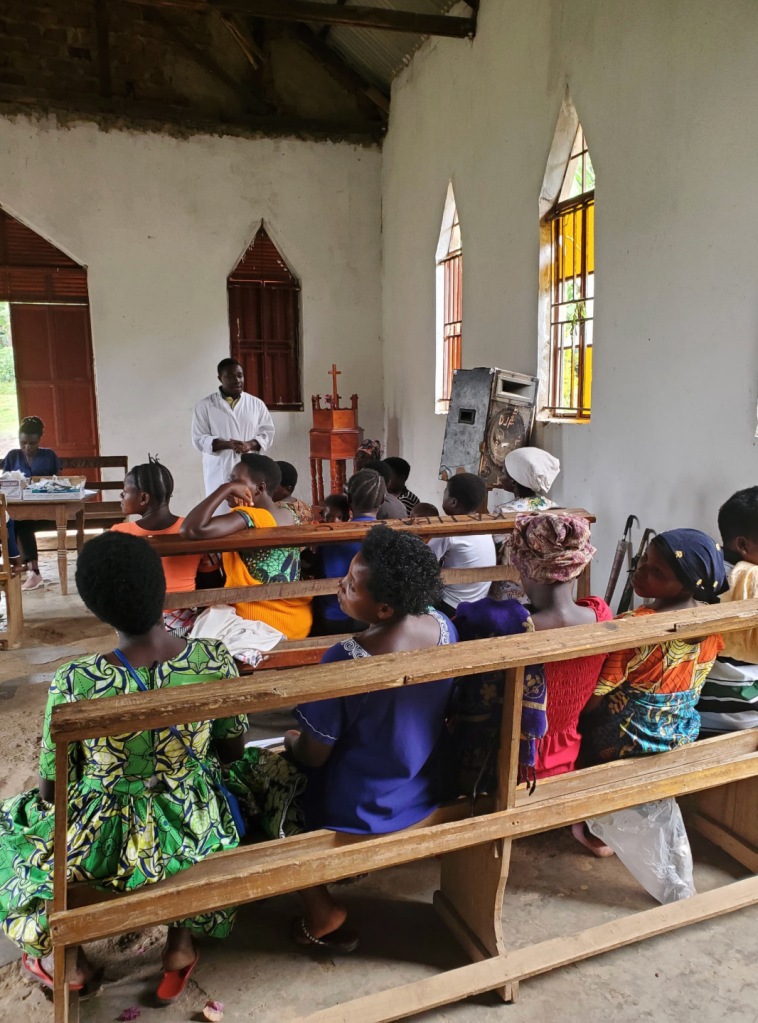
Photo 2: A Nutrition education session
Causes of Malnutrition in Kanungu District
The root causes of malnutrition in Kanungu are multi-faceted. Poverty is the primary driver – most families simply cannot afford diverse foods. The loss of Batwa ancestral lands means entire families have no farmland or livestock, so their food supply is extremely precarious. Seasonal factors also matter: malnutrition peaks in the “lean” season when last year’s stocks run out (local staff note that cases rise when crops run low). Frequent illnesses make things worse. Malaria, diarrhea and tuberculosis are rampant here, and all undermine children’s nutrition. For example, an HIV-positive mother’s child may need special nutrient-dense foods, but households struggling to find food cannot give it. Inadequate water and sanitation contribute to repeated gut infections, further hampering nutrient absorption. Finally, limited awareness plays a role: many parents have never seen a growth chart or understood how to combine foods for a balanced diet. All of these factors – poverty, food insecurity, disease and education gaps – intertwine to keep malnutrition rates high.
Strategies to Reduce Malnutrition
To continue driving down malnutrition, we pursue a multi-pronged strategy:
Early detection and screening: We are scaling up community screening so that no child slips through unnoticed. Our VHPs already screen children at Village Health Weeks and immunization clinics, but with more support we could equip every village with growth monitoring. Providing each VHP with MUAC tapes and scales – and training them to use these tools – would enable us to catch wasting in its early stages. We also work to integrate nutrition checks into every clinic and outreach visit (pregnant women and young children in ANC, under-5 clinics, etc.), following the model described in our village program.
Nutrition education and behavior change: We continue weekly cooking demonstrations both at the hospital and in villages. Parents learn how to cook nutrient-rich meals from local ingredients (e.g. groundnuts, beans, greens) and to breastfeed and feed young children properly. We also use radio programs and school talks (in partnership with local teachers) to spread messages about exclusive breastfeeding, hand-washing and food hygiene.
Food security support: We promote household gardening and small livestock as sustainable sources of food. Our demonstration gardens grow diverse vegetables and teaches techniques mulching, back yard and sack gardening to cope with our terrain
Health and sanitation interventions: We work alongside malaria and HIV clinics to integrate nutrition: every child diagnosed with HIV or TB also gets nutritional assessment and support. Clean water and hygiene are taught hand-in-hand with nutrition, because preventing diarrhea is part of preventing malnutrition. We advocate for functional boreholes and water filters in villages, since children who fall sick are more vulnerable to wasting.
Strengthening the health system: At the district level, we press for steady supplies of therapeutic foods (RUTF) and ready-to-use supplements.
Advocacy for Early Detection
Despite these programs, malnutrition can still claim children’s lives if detected too late. That is why early screening and advocacy are so critical. We need continued support to raise awareness that every child should be checked regularly. This means funding community growth monitoring days, supporting radio campaigns, and training church groups and schools to spot at-risk children. For instance, our Village Health Promoters have been effective at finding cases, but they need ongoing training and modest incentives to stay active. With a small investment (new MUAC tapes, transport for a rural health worker to reach all villages, mobilization materials), we can vastly expand our coverage. The WHO’s recent nutrition information initiative shows that better community data directly improves outcomes. By advocating for nutrition screening to be a routine part of all child and maternity visits, we can catch malnutrition before it becomes life-threatening.
In our own outreach we stress that child abuse and neglect often accompany malnutrition – both must be fought together. Creating a network of local “nutrition champions” in the Kanungu District would ensure no child remains hidden with malnutrition.
Conclusion and Call to Partners
As the nutritionist at Bwindi Community Hospital, I see the devastation that malnutrition inflicts on families. But I also see progress: under-five malnutrition admissions have stabilized and children are surviving at much higher rates thanks to our programs. Achieving this will require all of us hospital staff, community workers, local leaders and donors working together.
We invite donors and partners to join us in this fight. Support for nutrition is highly cost-effective. Funding can translate directly into tangible gains providing village volunteers with screening kits, extending our gardens project, or stocking the hospital kitchen with fortified foods. Every dollar spent on early detection and education multiplies into healthier children, fewer hospitalizations, and stronger futures.
By expanding our screening programs and community education, we can catch malnutrition early when it is cheap and easy to treat and prevent tragedy. I have seen firsthand the transformation in a child who, thanks to timely referral, recovers her strength and returns home. More needed advocacy and funding, we can ensure that no child in Kanungu dies for lack of food.
Kamara Daniel, Nutritionist, Bwindi Community Hospital – Kanungu District, Uganda
 reachbwindi.com