We would like to invite you to join this exciting twinning project run by REACH Bwindi in collaboration with Bwindi Community Hospital.
Bwindi Community Hospital (BCH) lies in a remote corner of South Western Uganda on the edge of the Bwindi impenetrable forest and 2km from the DR Congo border. It serves a rural population of around 100,000 including the marginalised, indigenous Batwa Pigmy tribes who were displaced from the forest when it became a national park. A large proportion of the population live in extreme poverty.
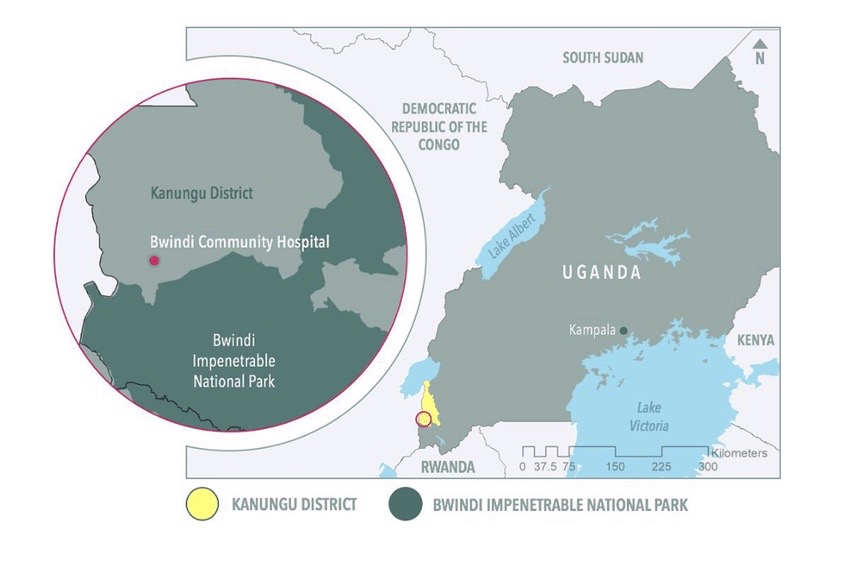
REACH Bwindi has set up a twinning project to support the essential work of the BCH community outreach team in making healthcare accessible to all by bringing it into the villages in the catchment area of BCH, some of which are isolated and very hard to reach. Monthly donations will contribute to these outreaches providing maternal and child health, HIV/AIDS and chronic care services and education.
There are two options for twinning:
Option 1: Twin your GP practice/ hospital department/ organisation with a village of your choice on the map for £50 a month
Option 2: Twin as an individual with a village of your choice for £10 a month
Please note all donations go directly to the community outreach team to support their work in all villages rather than an individual village.
You can make your donation via CAF. Our direct page on the Charities Aid Foundation is here:
https://cafdonate.cafonline.org/9930
Please fill in the form below if you would like to join the twinning project and let us know the village you choose and the name and address of the person or organisation you would like the certificate sent to.
You will then receive your certificate of twinning and 6 monthly updates which will include information on the activities of the community health team as a whole and an individual updates on the village you are twinned with.


About the Villages
Villages currently involved in the twinning project include Bugarura, Kashenyi, Iraaro, Kanyashande and Murushasha. Their location can be seen on the map below, in red.
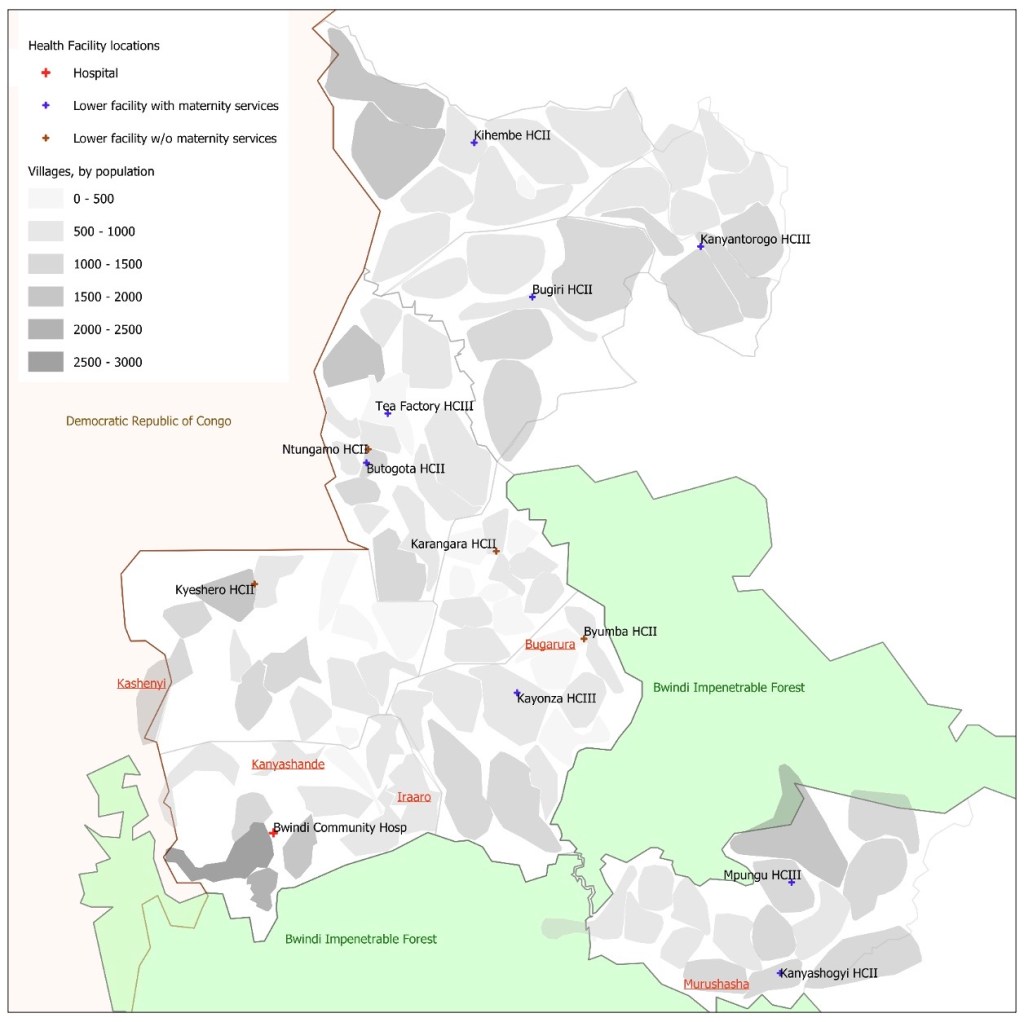
Kanyashande village
Kanyashande village has a population of 1,181. The village is a 10-minute ride from BCH on a motorbike. The main source of income for the village comes from Tea and Coffee farming. It has four churches and one government primary school from primary one to primary seven.
Kanyashande village is connected to the main Bogota-Bwindi road and has some smaller roads that connect it to neighbouring villages of Kyumbugushu and Rutendere.
Bugarura village
Bugarura village has a population of around 374 and is 30 minutes by motorbike to BCH and 2-3 hours on foot, but the nearer health facility (Byumba HCII- a BCH satellite clinic) is around 5km away. The village does not have a protected water source. As the village has no school the children have to walk a distance to attend school. The main source of income is growing Tea.
Kashenyi village
Kashenyi Village has a population of around 1331. The village is about a 40-minute ride by motorbike from Bwindi Community Hospital which is 10km away. However, the village is on a steep hillside with some parts not accessible by vehicle. A fresh water source requires walking 2km down a steep hill. The main source of income is from Tea and Coffee farming. The village has 5 churches and one school from primary 1 to primary 5. As Kashenyi is near the border with the Democratic Republic of Congo villagers often cross the border for markets.
Iraaro village
Iraaro village has a population of around 854. Bwindi Community Hospital is the nearest health facility and is about 30 minutes by motorbike. A small mud road connects the village to the main road and becomes unpassable during the rainy season as it gets muddy and slippery.
The major source of income within this area is Tea and Coffee farming. Iraaro has one school from primary 1 to Primary 4.
Murushasha village
Murushasha has a population of 1062. The village is situated in Mpungu about 38km from BCH and it takes approximately 90 minutes to travel there by motorbike and 4 hours on foot. There is a nearer Health facility (Kanyashogi HCII – a satellite clinic run by BCH) that is approximately 4km away. The village has 2 primary schools and is also attached to Bwindi national park. It has only 1 protected water source that is on one side of the village in a valley. About 80% of the available land for cultivation is planted with Tea which is the main source of livelihood.
A personal story from Iraaro village
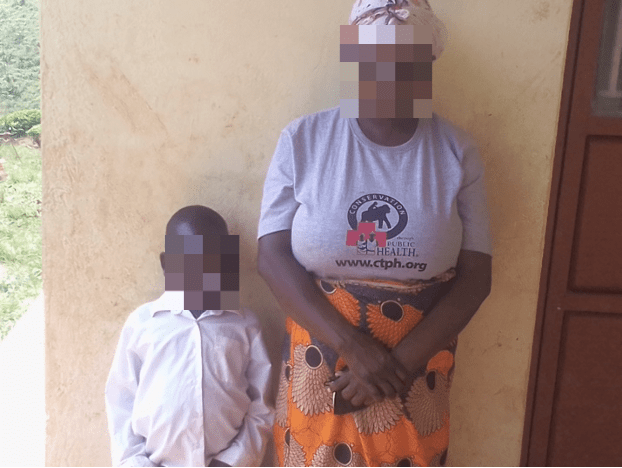
After Vincent’s father died, the little property that his late father had left was shared by his relatives and Vincent was left to be taken care of by Dinah who is a community health volunteer of Iraaro (photo above).
Dinah lives by working as a farm hand, predominantly picking tea. She would carry Vincent to the tea field, put him under a shed and pick the tea, and because they had not enough food she fed him on posho (corn bread), beans and cassava. He used to come into BCH frequently with malnutrition and started getting other medical conditions. On several occasions he had malaria, pneumonia, and many times Dinah did not have enough funds to bring him to hospital. The hospital, with help of the community leaders, identifies five poorest houses in a village and subscribes them at a lower rate for health insurance and Vincent with his supporting family were chosen. Ever since he was taken on and registered with the local health insurance, he has been able to access the hospital whenever he gets sickly. Dinah as his guardian was guided on preventing malnutrition and is now a community health volunteer. Dina says, “I want to thank the hospital for supporting me in raising Vincent and my other dependents, these children have access to health education at a low cost, and the community nurses, continue visiting our villages which helps continue to bring hope.”
More information
More information for each village and stories from their residents is available on request.
Please see links below to research articles from the community team at BCH:
- Community Health Volunteers in Primary Healthcare in Rural Uganda: Factors Influencing Performance. https://doi.org/10.3389/fpubh.2017.00062
- Community perceptions of mental illness in rural Uganda: An analysis of existing challenges facing the Bwindi Mental Health Programme. https://phcfm.org/index.php/phcfm/article/view/1404
- Mental illness in Bwindi, Uganda: Understanding stakeholder perceptions of benefits and barriers to developing a community-based Mental Health Programme. https://phcfm.org/index.php/phcfm/article/view/1462
- Establishing community mental health clinics increased the number of patients receiving care in rural Western Uganda. https://doi.org/10.3389/frhs.2023.1133770
- A Retrospective Cross Sectional Study of the Effectiveness of a Project in Improving Infant Health in Bwindi, South Western Uganda. https://doi.org/10.3389/fpubh.2018.00290
- Screening, Diagnosis, and Management of Patients With Alcohol Use Disorders at Bwindi Community Hospital, Uganda. https://doi.org/10.3389/fpubh.2018.00148
- Community-Based Health Insurance Increased Health Care Utilization and Reduced Mortality in Children Under-5, Around Bwindi Community Hospital, Uganda Between 2015 and 2017
https://doi.org/10.3389/fpubh.2018.00281
 reachbwindi.com